Bạn có đang khao khát có thêm khách hàng tiềm năng không? Bạn có muốn tăng đáng kể doanh số bán hàng của mình không? Trong thế giới kỹ thuật số ngày nay, một trang đích mạnh mẽ thường là vũ khí bí mật mà bạn cần. Nó không chỉ là một trang khác trên trang web của bạn; đó là một công cụ tập trung cao độ được thiết kế cho một mục đích cụ thể: chuyển đổi.
Nhưng việc xây dựng một trang đích thực sự hiệu quả – trang đích thu hút sự chú ý, truyền đạt giá trị và thúc đẩy hành động – đòi hỏi nhiều hơn là chỉ ghép một số văn bản và hình ảnh lại với nhau. Nó đòi hỏi cấu trúc chiến lược, nội dung hấp dẫn và tối ưu hóa liên tục. Và hãy thành thật mà nói, việc giải quyết các rào cản kỹ thuật như mã hóa hoặc phần mềm thiết kế phức tạp có thể là rào cản lớn đối với các nhà tiếp thị.
Đây là lúc một nền tảng chuyên dụng như Unbounce xuất hiện. Unbounce trao quyền cho bạn tạo, ra mắt và kiểm tra nghiêm ngặt các trang đích của mình mà không cần bằng cấp về phát triển web. Nó được thiết kế để giúp bạn tập trung vào các mục tiêu tiếp thị của mình: thu hút khách hàng tiềm năng đủ điều kiện và chuyển đổi họ thành khách hàng trả tiền. Bài viết này sẽ hướng dẫn bạn các yếu tố thiết yếu của một trang đích có tỷ lệ chuyển đổi cao và cho bạn thấy chính xác cách Unbounce có thể giúp bạn xây dựng, tối ưu hóa và mở rộng quy mô các nỗ lực của mình để đạt được kết quả bán hàng ấn tượng.
Hãy bắt đầu với những điều cơ bản. Điểm khác biệt giữa trang đích và trang chủ của trang web của bạn là gì? Trang đích là một trang web độc lập được tạo riêng cho chiến dịch tiếp thị hoặc quảng cáo . Khách truy cập “đến” trang này sau khi nhấp vào liên kết trong email, quảng cáo (như Google Ads hoặc quảng cáo trên mạng xã hội) hoặc kết quả tìm kiếm.
Không giống như trang chủ, thường đóng vai trò là trung tâm chung với nhiều tùy chọn điều hướng, trang đích chỉ tập trung vào một mục tiêu duy nhất. Nó có một mục tiêu chính: khiến khách truy cập thực hiện một hành động cụ thể. Hành động này có thể là đăng ký nhận bản tin, tải xuống sách điện tử, yêu cầu bản demo hoặc mua hàng. Trọng tâm duy nhất này chính là sức mạnh của nó. Bằng cách loại bỏ các yếu tố gây mất tập trung, bạn hướng dẫn khách truy cập trực tiếp đến mục tiêu chuyển đổi mong muốn.
Đối với việc tạo khách hàng tiềm năng, trang đích là không thể thiếu. Bạn cung cấp thứ gì đó có giá trị – nội dung có cổng như hướng dẫn, hội thảo trên web hoặc bản dùng thử miễn phí – để đổi lấy thông tin liên hệ của khách truy cập. Đây là cách trực tiếp và hiệu quả để xây dựng danh sách email của bạn và lấp đầy kênh bán hàng của bạn bằng những khách hàng tiềm năng quan tâm. Đối với các chiến dịch thương mại điện tử hoặc bán hàng trực tiếp, trang đích có thể tập trung vào một sản phẩm hoặc ưu đãi cụ thể, thúc đẩy khách truy cập thực hiện hành động “Mua ngay”.
Trang đích cho phép truyền tải thông điệp có mục tiêu cao . Vì bạn biết khách truy cập đến từ đâu (quảng cáo hoặc liên kết cụ thể mà họ nhấp vào), bạn có thể tùy chỉnh nội dung của trang để phù hợp hoàn hảo với sở thích ban đầu của họ. Sự liên quan này làm tăng đáng kể khả năng chuyển đổi so với việc gửi họ đến một trang chung chung.
Cuối cùng, việc tích hợp các trang đích hiệu quả vào chiến lược tiếp thị của bạn sẽ dẫn trực tiếp đến nhiều khách hàng tiềm năng đủ điều kiện hơn và tăng đáng kể tỷ lệ chuyển đổi bán hàng . Chúng là cầu nối quan trọng giữa các nỗ lực tiếp thị và kết quả kinh doanh của bạn.
Xây dựng trang đích là một chuyện; xây dựng trang đích thực sự chuyển đổi khách truy cập thành khách hàng tiềm năng hoặc khách hàng là một chuyện khác. Các trang đích hiệu suất cao có chung một số đặc điểm chính. Việc nắm vững các yếu tố này là nền tảng cho thành công của bạn.
Tiêu đề của bạn là điều đầu tiên mà khách truy cập nhìn thấy. Nó cần thu hút sự chú ý của họ ngay lập tức và truyền đạt lợi ích hoặc ưu đãi chính một cách rõ ràng. Một tiêu đề mạnh mẽ phải phù hợp hoàn hảo với quảng cáo hoặc liên kết đã đưa họ đến trang. Nó phải ngắn gọn, hấp dẫn và phù hợp với nhu cầu hoặc vấn đề của họ.
Hãy nghĩ về những gì khách truy cập của bạn đang tìm kiếm hoặc điểm đau mà họ gặp phải. Tiêu đề của bạn nên hứa hẹn một giải pháp hoặc kết quả có giá trị. Tránh sử dụng thuật ngữ chuyên ngành hoặc các tuyên bố chung chung. Hãy cụ thể và hướng đến lợi ích. Ví dụ, thay vì “Các tính năng phần mềm của chúng tôi”, hãy thử “Tiết kiệm 10 giờ một tuần với Công cụ báo cáo tự động của chúng tôi”.
Located just below the main headline, the sub-headline provides additional context and detail. It elaborates on the main offer or benefit presented in the headline. This is your chance to add a bit more persuasive copy without overwhelming the visitor immediately.
The sub-headline should be easy to read and digest. It acts as a bridge, smoothly transitioning the visitor from the initial hook of the headline into the main body of the page copy. Use it to reinforce the value proposition or add a crucial piece of information.
This is where you make your case. Your body copy shouldn’t just list features; it should explain the benefits those features provide to the user. Visitors care about how your product, service, or content will solve *their* problem or improve *their* situation.
Keep the copy concise and easy to scan. Use short paragraphs and bullet points to break up the text and highlight key advantages. Focus on clarity and persuasion. Use action-oriented language and speak directly to your target audience’s needs and desires.
Here are some aspects your copy should cover:
People process images much faster than text. Relevant, high-quality visuals – whether images, illustrations, or videos – can significantly enhance your landing page’s effectiveness. Visuals should support your message, evoke emotion, and make the page more engaging.
Use images of your product in action, happy customers, or graphics that explain complex concepts simply. Ensure visuals are professional and load quickly. Avoid generic stock photos that don’t add value or look inauthentic. Video can be particularly powerful for demonstrating value quickly.
In today’s skeptical world, social proof is essential. Showing that others trust and benefit from your offer can dramatically increase your conversion rates. This can take several forms:
Place social proof strategically on the page to build confidence.
The Call to Action (CTA) is arguably the single most important element on your landing page. This is the button or link that prompts the visitor to take the desired action. It must be immediately obvious and easy to find.
Your CTA button should stand out visually through color, size, and placement. The text on the button is critical – it should be action-oriented and clearly state what the visitor will get by clicking. Instead of generic terms like “Submit,” use phrases like “Download Your Free Guide,” “Get Instant Access,” “Request My Demo,” or “Claim Your Discount Now.”
Use persuasive language that creates a sense of urgency or highlights the benefit of clicking. Ensure there is enough contrast between the button and the background so it’s impossible to miss. Repeat the CTA if your page is long, but don’t overdo it.
If your goal is lead generation, you’ll need a form. The key here is simplicity. Only ask for the information you absolutely need. Each additional field you add can decrease conversion rates. For an initial lead, often just a name and email address is sufficient.
Place the form prominently, usually near your CTA. Ensure it’s easy to fill out on both desktop and mobile devices. Clearly label each field. Add a brief statement about privacy or what the user can expect after submitting the form to build trust.
Beyond social proof, other elements can build trust. These include a link to your privacy policy (especially important when collecting data), security badges (if handling transactions), and contact information. Making your business seem legitimate and trustworthy reduces visitor anxiety and increases conversion likelihood.
Understanding the elements of a great landing page is one thing; actually putting them into practice can be challenging. Many marketers struggle with the execution, especially if they lack technical skills or dedicated resources.
Building a custom landing page from scratch typically requires knowledge of HTML, CSS, and potentially JavaScript. Design skills are also essential to create a visually appealing and user-friendly layout. This often means relying on developers or designers, which can be slow and expensive.
Even with the page built, the work isn’t over. Optimization is key to maximizing conversion rates. This involves setting up A/B tests to compare different versions of your page elements (like headlines, CTAs, or images). Manually implementing and tracking these tests can be complex and time-consuming.
Analyzing the performance data – tracking conversions, traffic sources, and user behavior – requires specific tools and expertise. Making data-driven decisions for iterative improvements adds another layer of complexity. Without the right tools or processes, optimizing for conversion becomes a significant bottleneck.
Many businesses also struggle with the time required. Digital marketing moves fast. You need to be able to create and launch campaigns quickly to capitalize on opportunities. A slow landing page creation process can mean missed potential leads and sales.
Imagine having a tool that removes the technical barriers to building stunning landing pages and makes optimization an intuitive part of your workflow. That’s precisely what Unbounce offers. Unbounce is a leading platform specifically designed for marketers to build, publish, and test landing pages without needing IT help.
Unbounce isn’t just a page builder; it’s a conversion optimization platform. It provides all the tools you need in one place to create highly effective landing pages, drive more leads, and increase sales.
Its core philosophy is to empower marketers to move quickly and experiment often. By simplifying the page creation and testing process, Unbounce allows you to focus on what you do best: crafting compelling marketing messages and driving traffic.
Unbounce removes the frustration from building landing pages. Here’s how it helps you create pages that look professional and are designed for conversion:
This is the heart of Unbounce. The intuitive visual editor allows you to drag and drop elements onto your page canvas. No coding required. You can add text blocks, images, forms, buttons, videos, and more with ease. You have full control over the layout and design.
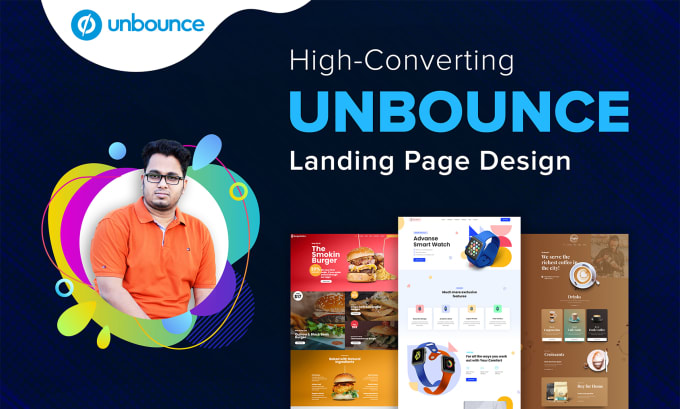
Unbounce also offers a vast library of templates. These are professionally designed and categorized by goal (lead generation, sales, events, etc.). You can start with a template relevant to your campaign and customize it to match your brand and offer, saving significant time.
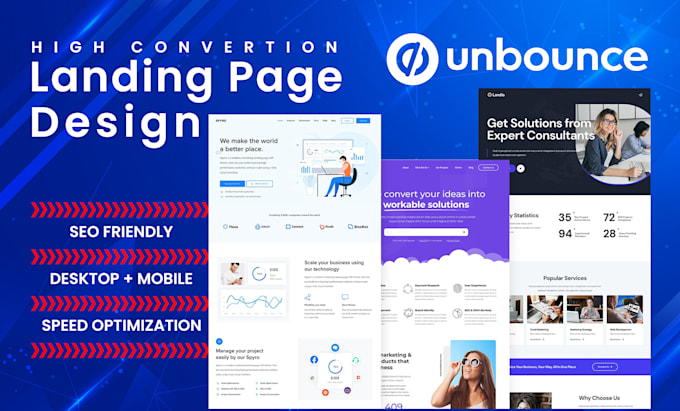
With a majority of internet traffic coming from mobile devices, having a mobile-responsive landing page is non-negotiable. Unbounce makes this easy. As you build your page, you can switch between desktop and mobile views to see how it looks and make specific adjustments for smaller screens. This ensures a great user experience for everyone, regardless of how they access your page.
Your landing page doesn’t exist in a vacuum. It needs to connect with your other marketing tools. Unbounce offers hundreds of integrations with popular services like HubSpot, Salesforce, Mailchimp, Zapier, Google Analytics, and many more. This allows you to automatically send leads to your CRM, add subscribers to your email list, or track conversions directly in your analytics dashboard without manual data entry or complex setups.
Page speed is critical for both user experience and SEO. Visitors are impatient, and slow-loading pages have high bounce rates and lower conversion rates. Unbounce is built with speed in mind. Pages published on Unbounce’s servers are optimized for fast loading times, helping to ensure visitors don’t abandon your page before it even loads.
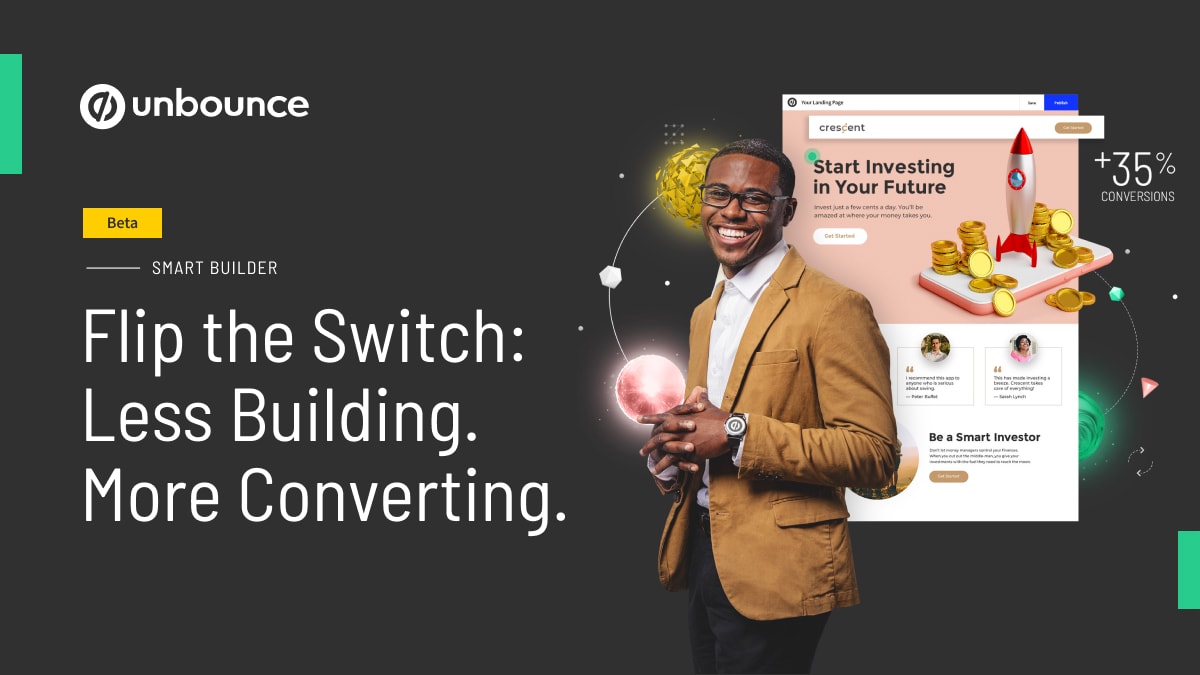
Building a landing page is just the first step. The real magic happens through optimization. Unbounce provides powerful built-in tools to help you test and improve your page’s performance continuously.
This is one of Unbounce’s standout features. You can easily create variations of your landing page directly within the platform. Change a headline, try a different image, alter the CTA button text or color, or rearrange sections. Unbounce allows you to split traffic between these variations to see which one performs better in terms of conversion rate.
A/B testing is fundamental to CRO. It removes guesswork and allows you to make data-driven decisions. Unbounce provides clear reporting on how each variation is performing, including conversion rates and statistical significance, making it easy to identify the winner and implement the changes.
What can you A/B test? Almost anything! Experiment with:
Testing allows you to understand what resonates most with your specific audience and continuously push your conversion rates higher.
Unbounce’s Smart Traffic is a powerful AI-powered feature. Instead of manually guessing which page variation might work best for a specific visitor, Smart Traffic automatically routes each visitor to the landing page variant where they are most likely to convert. It learns from visitor attributes and past conversion data to make real-time routing decisions.
This means you can run multiple page variations simultaneously, and Smart Traffic ensures that the right message gets to the right person, maximizing your overall conversion rate without complex manual segmentation or analysis.
Unbounce provides detailed dashboards to track the performance of your landing pages and A/B tests. You can see visits, conversions, conversion rates, and other key metrics at a glance. This data is essential for understanding what’s working and identifying areas for improvement.
Having this data readily available empowers you to make informed decisions about your optimization efforts. You can see which tests are yielding the best results and apply those learnings to future campaigns.
Beyond standard landing pages, Unbounce also offers tools to create popups and sticky bars for your website. These can be used to capture attention, highlight special offers, gather email subscribers, or drive traffic to your landing pages. They can be triggered based on visitor behavior (like exit intent or scroll depth) for maximum impact.
Getting started with Unbounce is straightforward. Here’s a simplified look at the process:
First, define the purpose of your landing page (e.g., generate leads for an e-book, sell a specific product, register attendees for a webinar). Then, browse the Unbounce template library and select a template that aligns with your goal and your brand’s visual style.
Open the template in the drag-and-drop builder. Replace the placeholder text and images with your own compelling copy and visuals. Adjust colors, fonts, and layout elements to match your brand identity. Ensure your unique value proposition is clear.
Design your Call to Action button. Write persuasive button text and make sure it’s visually prominent. If you need to capture lead information, easily add a form element and customize the fields you need.
Connect your landing page to Google Analytics or other tracking tools. Set up integrations with your CRM, email marketing service, or other platforms so that lead data flows automatically to the right place.
Once you’re happy with the design and content, you can publish your page directly through Unbounce’s servers or connect it to your own domain. Unbounce provides options for both.
Before driving significant traffic, consider creating a variation of your page. Change just one key element (like the headline or CTA) and set up an A/B test within Unbounce to start gathering data immediately.
Send traffic to your newly published landing page from your marketing channels – paid ads, email campaigns, social media posts, etc.
Monitor your page’s performance in the Unbounce dashboard. See which versions (if testing) are converting best. Use the data to understand what resonates with your audience and make ongoing improvements to your page and your future campaigns. This continuous cycle of testing and optimization is key to long-term success.
The ultimate goal of effective landing pages and optimization is tangible business results. Businesses using platforms like Unbounce consistently report significant improvements in their marketing performance. By creating highly focused pages and continuously optimizing them, they see higher conversion rates than sending traffic to less targeted pages.
This leads directly to a lower cost per lead (CPL) and a higher return on investment (ROI) for their marketing spend. More qualified leads entering the sales funnel mean more opportunities for the sales team. Higher conversion rates on sales pages mean more direct transactions.
The ability to quickly test new offers, messages, and designs allows marketers to be agile and responsive to market demands and customer feedback. This adaptability is a major competitive advantage in the fast-paced digital landscape.

For marketers looking to push their results even further, Unbounce offers advanced features:
DTR allows you to dynamically swap out text on your landing page to match the search query a visitor used or the parameter in the URL. This makes your page copy incredibly relevant to what the visitor is looking for, often resulting in higher quality scores for paid ads and better conversion rates.
While Unbounce is no-code, the Script Manager allows advanced users to add custom JavaScript or CSS for even greater customization or integration possibilities, without needing to edit the page code directly.
Investing in a platform like Unbounce isn’t just buying software; it’s investing in your business’s growth engine. It saves you valuable time and resources by eliminating the need for constant technical support for page creation and updates.
It removes the technical intimidation factor, empowering marketing teams to take control of their conversion rates. By making A/B testing and optimization accessible, it fosters a culture of experimentation and continuous improvement.
The direct impact on your bottom line through increased lead volume and higher sales conversion rates quickly justifies the cost. Unbounce allows you to scale your lead generation and sales efforts effectively, giving you a competitive edge in acquiring new customers and growing your revenue.
Tóm lại, các trang đích hiệu quả không chỉ là ‘một thứ tốt để có’; chúng là thành phần cơ bản của một chiến lược tiếp thị kỹ thuật số thành công nhằm tạo ra khách hàng tiềm năng và thúc đẩy doanh số. Chúng cung cấp môi trường tập trung cần thiết để thuyết phục khách truy cập thực hiện hành động mong muốn.
Trong khi việc xây dựng và tối ưu hóa các trang này có thể mang lại nhiều thách thức, các công cụ như Unbounce biến sự phức tạp này thành một quy trình dễ quản lý, thậm chí thú vị. Với trình xây dựng trực quan, khả năng thử nghiệm A/B mạnh mẽ và các tính năng thông minh chuyển đổi, Unbounce cung cấp mọi thứ bạn cần để tạo các trang đích có tỷ lệ chuyển đổi cao và liên tục cải thiện hiệu suất của chúng.
Hãy ngừng vật lộn với những hạn chế về mặt kỹ thuật và phỏng đoán. Hãy tận dụng sức mạnh của phần mềm trang đích chuyên dụng. Bằng cách tận dụng Unbounce, bạn có thể hợp lý hóa các nỗ lực tiếp thị của mình, tăng đáng kể việc tạo khách hàng tiềm năng, thúc đẩy số lượng bán hàng và đạt được sự tăng trưởng kinh doanh bền vững. Hãy bắt đầu xây dựng trang đích có tỷ lệ chuyển đổi cao ngay hôm nay và khai phá toàn bộ tiềm năng của bạn.