
 Gigachad Garen
There is no grand thesis here in the way there is in CodeRabbit‘s later “understanding is the bottleneck” essay — this is a narrower piece, announcing that CodeRabbit‘s pull-request reviewer now also runs, for free, directly in the editor as you type and commit.
Precisely because it’s a smaller, more concrete piece, it’s a useful text to review differently: not by picking apart a grand argument, but by asking whether the product decision it describes actually makes sense, what it reveals about where AI-assisted development is heading, and what’s conspicuously absent from the pitch. A launch post is itself a kind of argument — “this is worth your attention, and here’s why” — and it’s worth taking that argument as seriously as a more philosophical essay, because launch posts are where strategic bets get made legible.
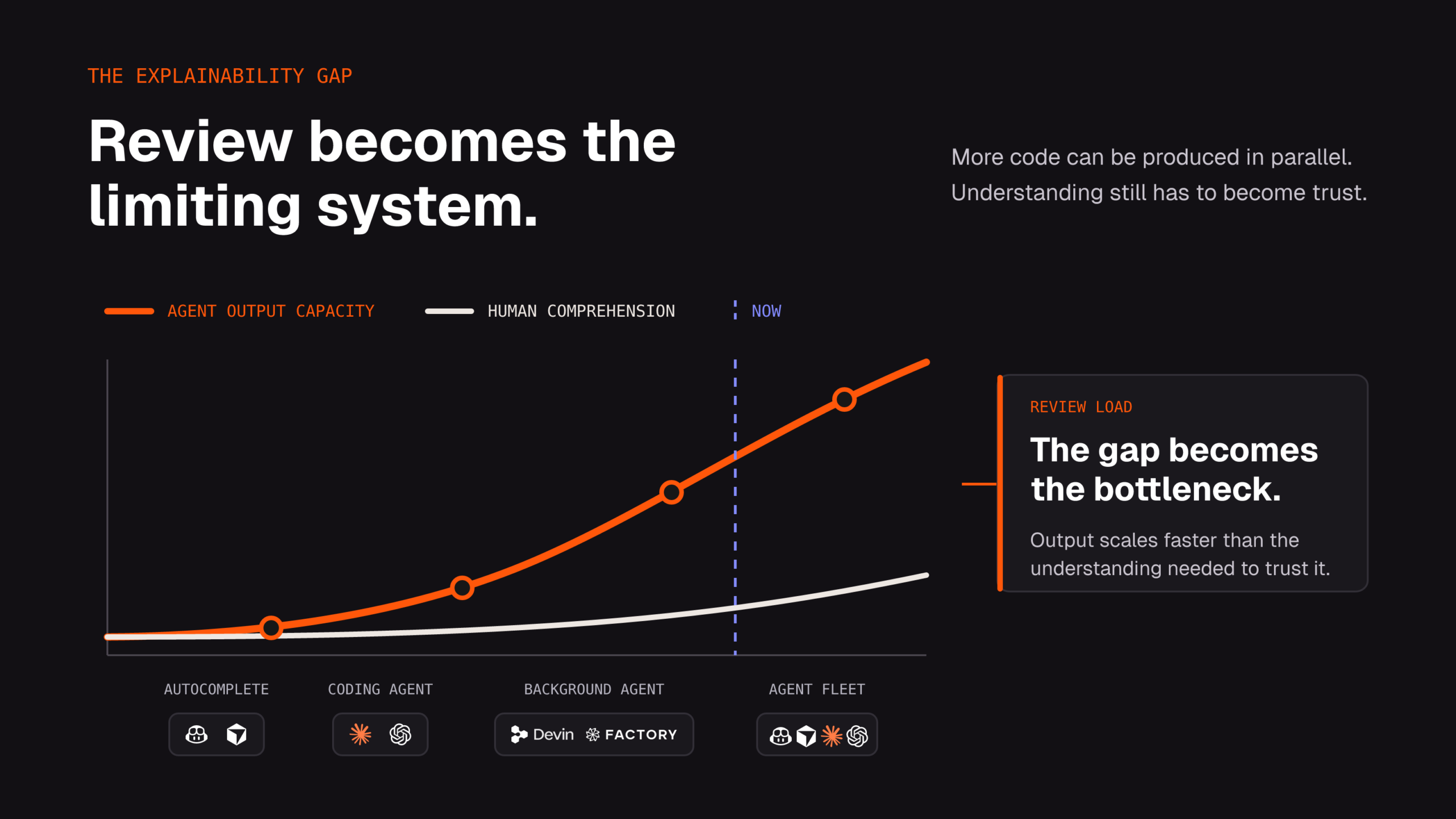
The core claim is straightforward: as more code is generated by AI coding agents, a second, independent check becomes more important, and that check is more valuable the earlier it happens. CodeRabbit‘s answer is to move its reviewer from the pull request — where it already lived — into the IDE itself, reviewing both committed and uncommitted changes as a developer works, essentially becoming what the post calls a “pair programmer” that comments line by line.
A model that writes a function is not a strong critic of that same function, for reasons that are somewhat structural — it’s the same weights, the same blind spots, often the same context window, evaluating its own output. Whether or not you buy CodeRabbit‘s specific solution, the diagnosis that “the thing that wrote it is not a trustworthy judge of it” is sound, and it’s the same intuition behind why human code review exists in the first place, independent of AI. This is really just an old idea — separation of authorship and review — reapplied to a new author.
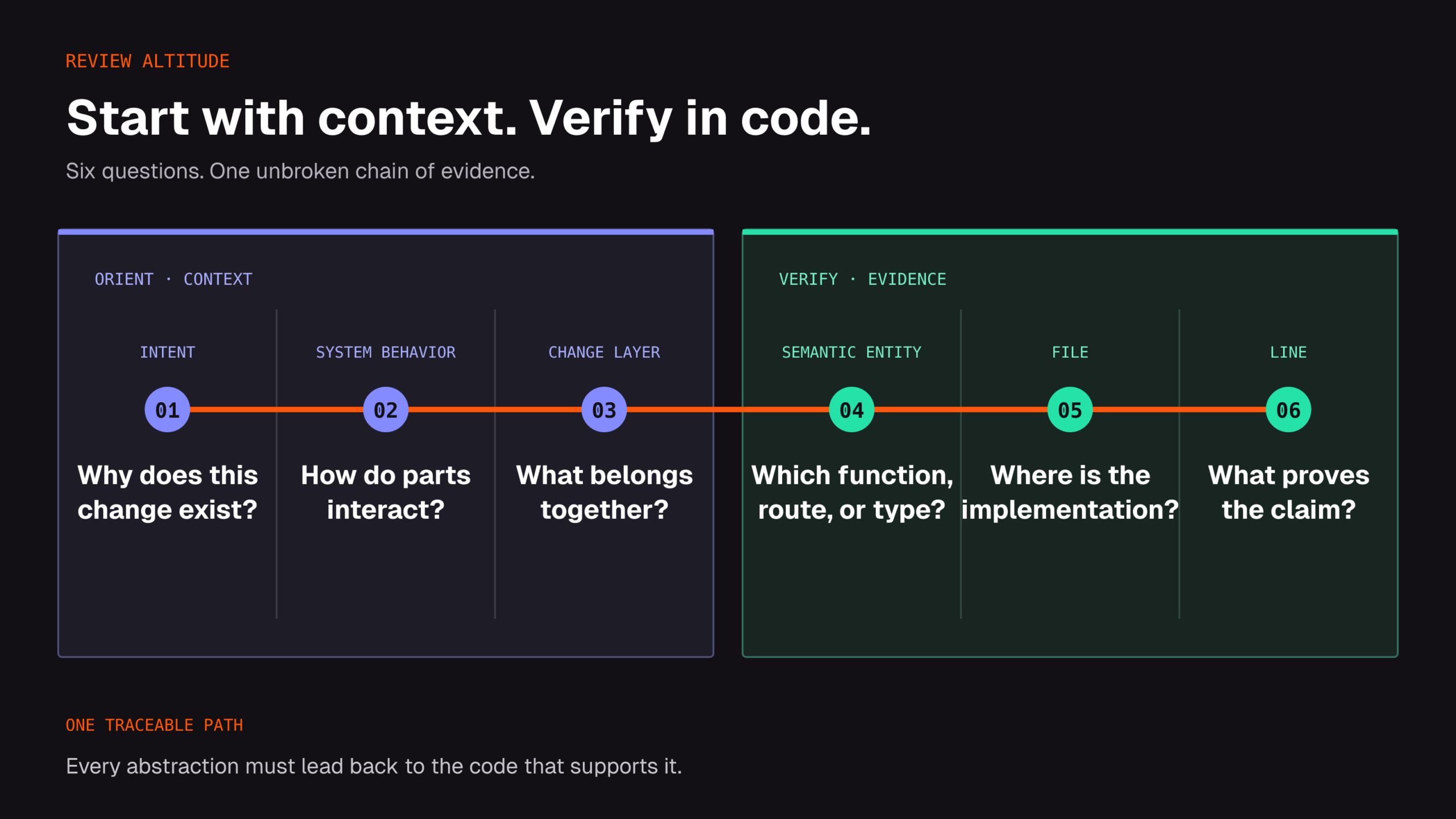
The most substantive part of this announcement isn’t the free pricing, it’s the placement. Up to this point, CodeRabbit‘s identity was a PR reviewer: it ran on GitHub or GitLab, after code was pushed, as part of the pull-request workflow. Moving into the editor is a different bet, and I think it’s the more interesting one to evaluate, because it changes the fundamental unit of review from “a finished, intentional change” to “code as it’s still being written.”
There’s a real tradeoff buried in that shift, and the post glosses over it in a single sentence — “IDE reviews are a lightweight, faster version of our PR reviews” — that undersells how consequential it actually is. A PR review has the benefit of reviewing a stable artifact. An IDE review, by contrast, is happening against a moving target — uncommitted, frequently rewritten, sometimes half-finished code that the author hasn’t yet decided is worth keeping. Reviewing that is a genuinely different task, closer to a linter with opinions than to code review in the traditional sense.
Where I’d push a little harder than the post does: there’s a real risk that earlier feedback, delivered constantly and cheaply, trains developers to outsource the very judgment that review is supposed to develop in the first place. If a comment appears next to every few lines as you type, two things could happen. The optimistic version is what the post implies — bugs get caught before they ever reach a teammate. The more pessimistic version is that constant inline commentary trains developers into a mode of writing code for the reviewer rather than thinking it through themselves.
Announcing something as “completely free” is a strong opening hook, and it’s worth asking what’s actually being given away versus what’s being seeded. The post is upfront, later on, that this is “a lightweight version” with lower rate limits than the paid PR-reviewing product, and that the full version is what’s recommended for production use. That’s a reasonable and honest disclosure, and I don’t think it’s misleading exactly. But it does mean the headline “free” is doing more marketing work than product work.
There’s a more interesting strategic logic underneath the free offer that the post doesn’t spell out explicitly, but which I think is the real reason this move makes sense: distribution. An IDE extension can be installed by any individual developer in about thirty seconds, with no organizational buy-in required at all. That is a fundamentally different, and much lower-friction, distribution channel, and giving away the IDE experience for free is a very sensible way to seed adoption at the individual level.
The post’s headline explicitly name-checks Cursor and Windsurf — both of which are, notably, AI-native editors that ship with their own increasingly capable built-in code intelligence. This is a genuinely bold placement: CodeRabbit is announcing that it works inside two products that are, in some sense, becoming competitors to the broader category CodeRabbit occupies. The post treats this as pure compatibility news without acknowledging that Cursor and Windsurf have every incentive to eventually build this exact review capability natively.
The strongest substantive argument in the post, and the one I think holds up best under scrutiny, is the case for running review at two points in the workflow rather than choosing one. The post argues that IDE review and PR review are complementary rather than redundant: the IDE catches issues while a developer still has full context on what they just wrote and can fix things in seconds, while the PR-level review catches issues that only become visible once several people’s commits come together.
This is a genuinely good insight and is not simply an assertion in service of the sale — it maps onto something true about how software actually breaks. Plenty of real defects are invisible to any single developer working in isolation because the defect is the interaction between two people’s independently reasonable decisions. That class of bug can only be caught at the point where the changes actually meet, which is the pull request.
First, the “Fix with AI” framing — routing complex suggestions to the developer’s preferred coding agent rather than trying to auto-resolve everything itself — is a sensible design choice. It resists the temptation to have the review tool also be the fix tool for everything.
Second, being explicit that IDE reviews carry lower rate limits than PR reviews, and pointing developers to documentation for the exact comparison, is the right way to disclose a tiered product without pretending the tiers don’t exist.
Third, “fork-compatible and language-agnostic” is a modest-sounding claim that actually reflects a reasonable technical bet: targeting the VS Code extension API once and inheriting compatibility with every fork is efficient.
Judged purely as a piece of writing, this is a competent, unpretentious launch post that does what launch posts are supposed to do. Judged as a product and strategy decision, though, I think it’s a smarter move than the post itself lets on, and also a riskier one than the post lets on, and both of those things are true at once.
It’s smarter because moving into the editor is the correct distribution strategy for a developer tool in 2025 — cheap to try, no organizational gatekeeping, and a natural on-ramp to the higher-value paid product. It’s riskier because embedding inside Cursor and Windsurf means embedding inside two products with every long-term incentive to build this capability themselves.
None of that means the launch was a bad idea. I think it was a good one, probably the right call, and the free-tier wedge into a low-friction surface is exactly the kind of move a company confident in its core review quality should make. But a genuinely useful review of a launch post like this one should read past the enthusiasm of “vibe code with confidence” to the strategic bet actually being made underneath it.
