
Software development has been going through a major shift. AI coding assistants like GitHub Copilot, Cursor, and Claude Code can now write hundreds of lines of code in seconds. This speed helps teams ship faster than ever, but it also brings a new problem: how do you review that much code effectively?
Many engineering teams are realizing that writing code is no longer the bottleneck — reviewing it is.
This is exactly where CodeRabbit comes in.
Why Traditional Code Review Is Struggling
AI has completely changed the development landscape:
- Developers are producing code at an unprecedented pace.
- Pull requests are getting larger and more frequent.
- Senior engineers spend a lot of time reviewing repetitive changes.
- Humans can easily miss subtle logic flaws or security issues.
Even experienced teams sometimes let serious issues slip through the first round of human review — including business-logic vulnerabilities.
CodeRabbit isn’t meant to replace human reviewers. Instead, it acts as an extra layer of protection that works alongside your engineers.
What Is CodeRabbit?
CodeRabbit is an AI-powered code review platform built to analyze pull requests, catch bugs, flag security risks, and give actionable feedback before code ever reaches production. Instead of relying solely on manual review, teams can use CodeRabbit as an intelligent reviewer working side by side with human engineers.
It integrates directly with GitHub, GitLab, IDEs, and existing developer workflows, so adopting it doesn’t require overhauling how your team already works.
Standout Features
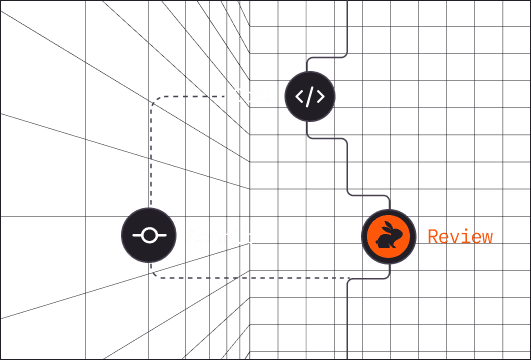
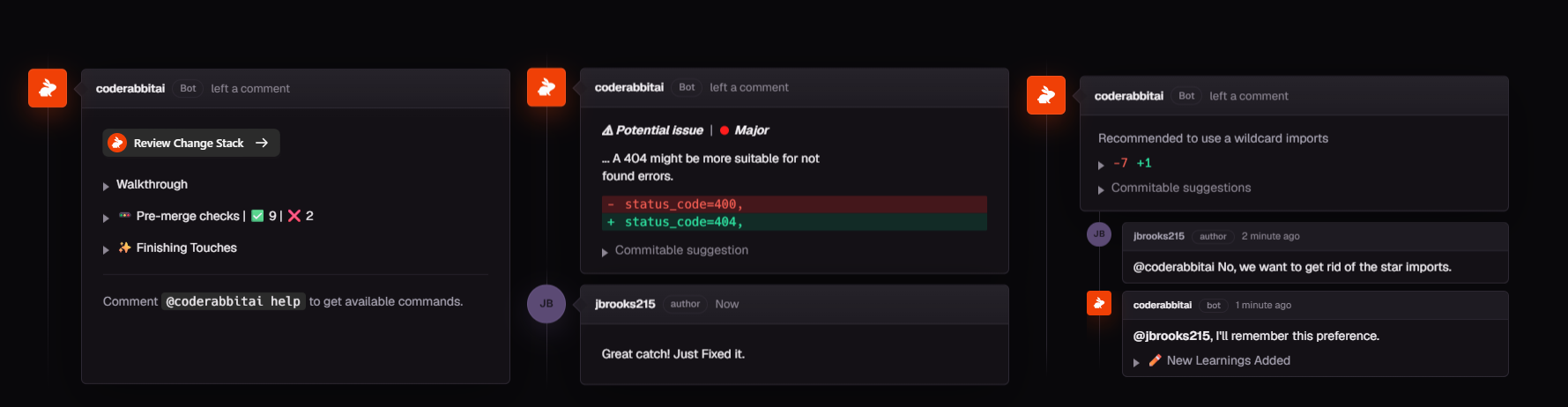
AI-powered pull request reviews — CodeRabbit automatically reviews pull requests and leaves contextual comments right inside the PR workflow, so developers get feedback immediately instead of waiting on a teammate.
Bug detection and security analysis — The platform identifies logic errors, security risks, performance issues, and code-quality problems that might otherwise go unnoticed, combining AI analysis with static analysis tools and security checks.
Pull request summaries — Large PRs can be hard to digest quickly. CodeRabbit generates concise summaries, walkthroughs, and architectural insights so reviewers can understand changes faster.
IDE and CLI reviews — Developers can review code directly in their own dev environment before even opening a pull request, catching issues earlier in the development cycle.
Learning system — One of CodeRabbit’s standout capabilities is learning from team feedback and adapting future reviews to match each team’s coding standards and preferences.
Autofix capabilities — Recent updates let CodeRabbit automatically implement fixes for certain findings, cutting down on repetitive engineering work.
Pros and Cons
Pros:
- Significantly cuts down code review time.
- Automatically detects bugs and security issues.
- Integrates directly with GitHub and GitLab.
- Delivers clear, easy-to-understand feedback.
- Learns team-specific coding practices.
- Supports IDE, CLI, and pull-request workflows.
- Includes enterprise-grade security and compliance features.
Cons:
- Premium plans can get pricey for larger teams.
- AI suggestions still require human validation.
- Some advanced features are locked behind higher-tier plans.
- Teams may need time to fine-tune review instructions for the best results.
Pricing
CodeRabbit offers a free tier for individual developers and open-source projects, making it easy to try before committing. Paid plans currently start around $24 per developer per month, with higher tiers adding advanced automation, planning tools, and enterprise controls.
Who Should Use CodeRabbit?
CodeRabbit is especially useful for:
- Startup engineering teams
- SaaS companies
- Open-source maintainers
- Remote development teams
- DevOps organizations
- Agencies managing multiple repositories
- Teams adopting AI-assisted coding workflows
How CodeRabbit Compares to Alternatives
CodeRabbit vs. GitHub Copilot — Copilot is mainly focused on generating code, while CodeRabbit focuses on reviewing and improving code after it’s written. For most teams, the two tools complement each other rather than compete.
CodeRabbit vs. SonarQube — SonarQube remains a solid static analysis platform, but it typically requires more setup and maintenance. CodeRabbit offers a more conversational, AI-driven review experience.
CodeRabbit vs. Amazon CodeGuru — CodeGuru works well in AWS-centric environments, whereas CodeRabbit offers broader workflow integrations and a more developer-friendly experience overall.
CodeRabbit vs. Qodo (formerly CodiumAI) — Qodo puts a strong emphasis on automated test generation alongside code review, making it a solid choice for teams that prioritize test coverage. CodeRabbit, on the other hand, is built more specifically around the depth of pull request review and contextual feedback, with less focus on generating new test suites. Teams that need robust test automation as well as review may find value in using both tools together.
Final Verdict
As AI-generated code becomes the norm, smart code review matters more than ever. CodeRabbit tackles this challenge by combining automated pull request reviews, bug detection, security analysis, and workflow automation into one developer-friendly package.
The platform has quickly become one of the most widely adopted AI code review tools, connected to a huge number of repositories and credited with catching tens of millions of defects across projects.
For teams looking to improve code quality, cut down on review bottlenecks, and ship software faster, CodeRabbit is a compelling addition to a modern development stack.
Whether you’re a solo developer, a startup founder, or an engineering manager, CodeRabbit offers a practical glimpse into the future of software quality assurance.